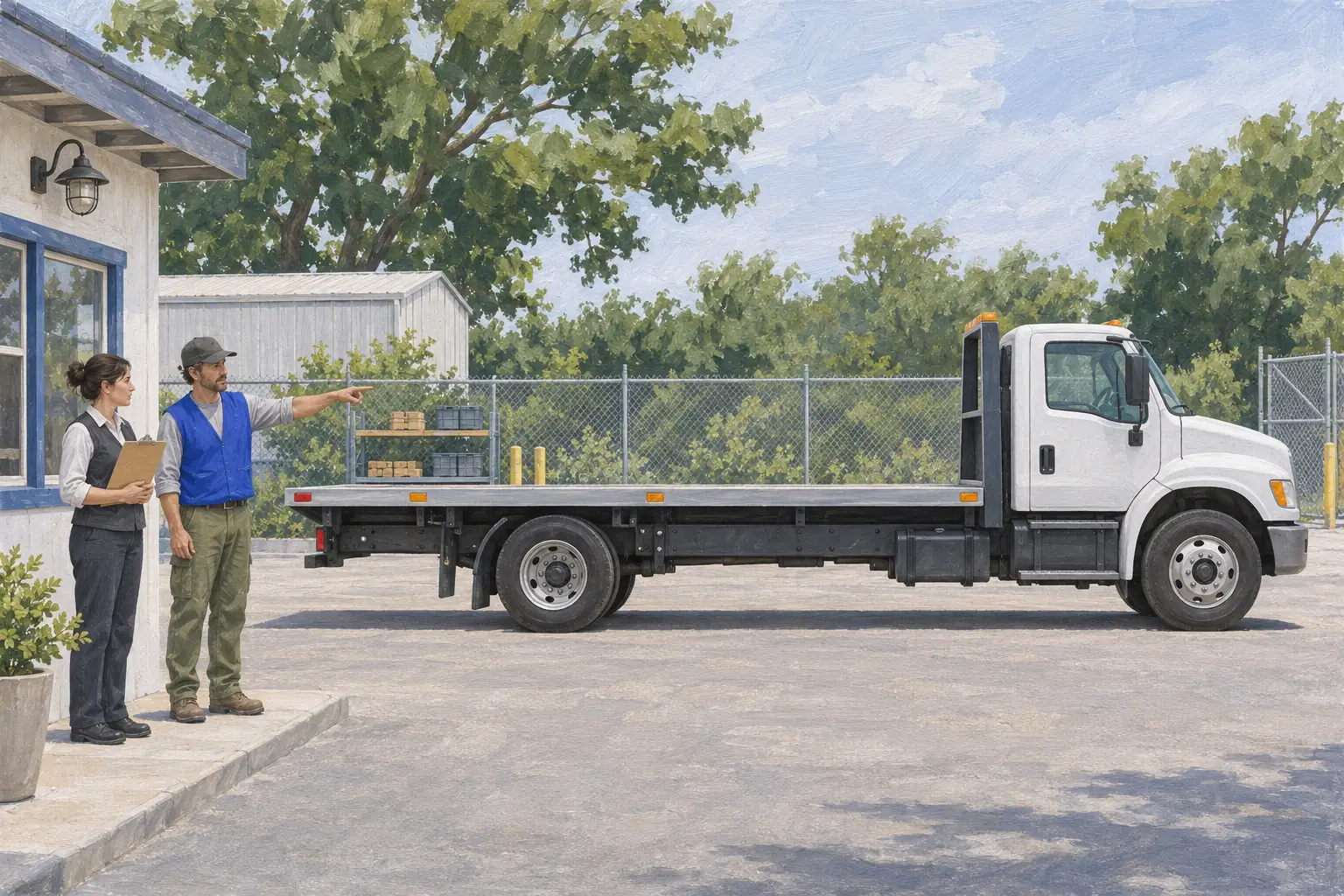
A tow request is useful when the dispatcher can decide what to do next without starting the conversation over. Start with where the caller is and whether anyone is in danger. Equipment, rates and acceptance remain decisions for your dispatcher. This checklist supports a towing call answering workflow; it does not replace dispatch judgment.
Ask one question, then listen
A stranded caller may be borrowing a phone, unsure of the road name or watching traffic. Keep questions short. Read the pickup back rather than assuming the first version is complete. An address works in a parking lot; a highway needs direction and a nearby exit, mile marker or landmark. Record uncertainty explicitly instead of filling a gap with a guess.

Printable towing call intake checklist
Adapt this checklist to your operation. Leave unknown answers blank; your team confirms acceptance.
- Pickup: street address and cross street, or highway, direction and nearest exit, mile marker or landmark. Read it back.
- Safety: is anyone hurt, and is the caller away from moving traffic? Injury, fire, smoke or a live traffic lane means call 911 first.
- Vehicle: year, make and model. Does it roll? Record yes, no or unknown rather than guessing.
- Request: breakdown, flat tire, accident, ditch or winch-out, lockout, or scheduled tow. Note what the caller reports.
- Destination: requested drop-off address or shop. Mark unknown if the caller has not chosen one.
- Authority: for private-property or impound enquiries, who authorizes the tow? Staff must verify authority.
- Dispatch reference: motor-club or insurer name, job number and dispatch callback when applicable.
- Contact: caller name and best callback number. Read the number back and confirm it.
- Handoff: urgent or routine, configured transfer attempted or callback needed, and any unanswered question.
Make the location usable
Ask the caller to describe the location they can identify safely. Do not ask them to walk along a highway looking for a sign. Repeat direction and landmark together: the same exit on the opposite carriageway is a different pickup. A stated location is still caller-reported; phone intake cannot independently verify GPS or road access.
Recognize danger before collecting the rest
If someone is hurt, the vehicle is burning or smoking, or the caller is in a live traffic lane, tell them to reach safety if they can and call 911 first. Never promise emergency dispatch. A highway shoulder, darkness, bad weather or a child or pet in the vehicle needs prompt human attention, but a transfer attempt is still not a truck assignment.
From roadside request to dispatcher review
Recognize the request
Ask whether anyone is hurt or exposed to moving traffic before the rest of the checklist.
Record useful context
Repeat highway direction and the nearest safely identifiable landmark with the callback.
Choose the approved route
Pass urgency, vehicle condition and authority questions to the configured dispatcher.
Confirm the next step
Say whether a transfer is being attempted or a callback is needed; do not invent an ETA.
- YesUse the confirmed next step
- Repeat only the instruction your dispatcher has approved.
- NoKeep it a request
- Explain the transfer attempt or callback. Do not say a truck is on the way.
| Request or option | Capture or test | Decision that stays with your team |
|---|---|---|
| Highway pickup | Direction, landmark and caller-reported safety | Dispatcher confirms access and equipment |
| Motor-club request | Organization, job reference and dispatch callback | Staff confirms terms and accepts or declines |
| Impound enquiry | Question and callback; authority still unverified | Authorized staff confirms release requirements |
Run a fictional call where the caller gives the wrong carriageway, corrects the callback number and does not know whether the vehicle rolls. The record should preserve the correction and the unknown condition. It should never supply an equipment choice from a guess.
Then let the on-call phone go unanswered. Check that the request reaches the designated fallback and that the caller hears an honest callback step. A captured enquiry, an attempted transfer and an accepted tow are three different outcomes.
Keep authorization separate from a request
A motor-club job number helps your dispatcher find the request; it is not acceptance of a rate. A property manager asking for a removal may not have authority. An impound caller asking about release does not establish ownership or clear a hold. Record their question and contact, then let authorized staff verify it. Never accept payment details or agree to release a vehicle during intake.
Read back the callback and explain the next step
Ask for the best callback even when caller ID is visible. Tell the caller whether you are attempting the configured on-call transfer or passing the request for a callback. Do not invent an arrival time, price or acceptance. Prices may only come from saved business facts, and the dispatcher confirms availability.
Wenly answers forwarded calls automatically in your business name. Your team receives an email after the call, with configured urgent transfers available under your plan and schedule. Test after-hours handoff before relying on it and review dispatch answering boundaries.
Review the checklist against real operations
Have the dispatcher read it before it is used. Add your own approved service area, equipment questions and escalation contacts. Test a roadside call, an insurer request and an impound question. Check what was captured and what still needs a callback. Use the missed-tow cost worksheet to decide whether the volume justifies changing your coverage.
Continue with towing call answering workflow, after-hours answering and fallback setup, towing dispatch limits and authority.