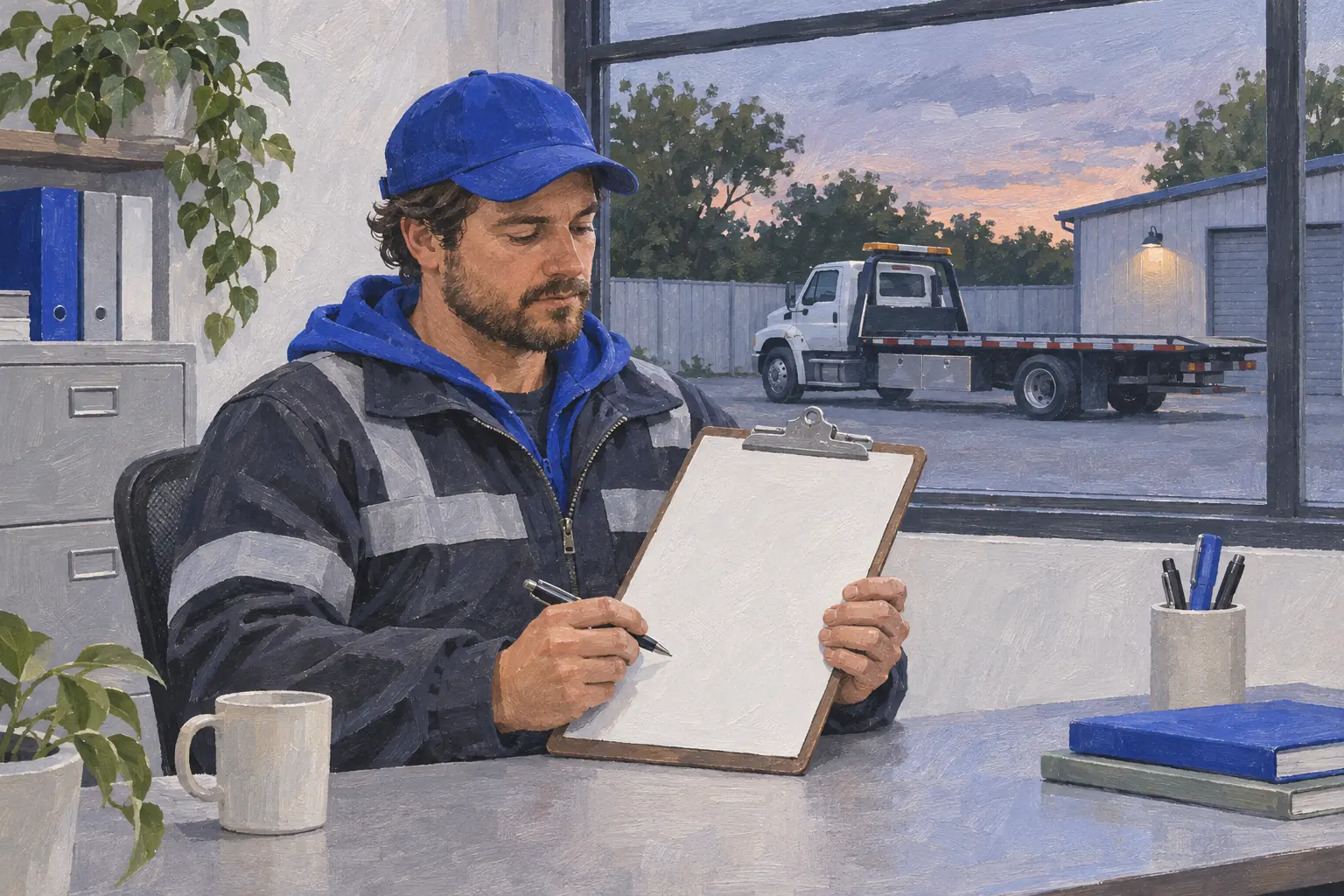
The towing call intake checklist covers what to capture. This page covers what to say. The wording below is an example: replace the bracketed parts with your own company details and have your dispatcher approve it before anyone uses it. It supports a towing call answering workflow; it does not replace dispatch judgment.
Open the call

Lead with safety, not with a name or a rate. A caller on a shoulder or in a ditch hears that you care about the right thing first, and the answer decides what you say next. If they say someone is hurt, there is fire or smoke, or they are standing in a live lane, stop the script.
Pin down the location
- "What road are you on, and which direction were you heading?"
- "What's the nearest exit, mile marker, cross street or business you can see from where you are?"
- "Let me read that back: [location]. Is that right?"
Never ask the caller to walk along a highway to find a sign. If they cannot tell you, record what they can see and mark the rest as unknown. A wrong direction on a divided highway sends a truck to the wrong side, so always read direction and landmark back together.
Vehicle and the problem
A short script with a usable finish
Recognize the request
Open with the business name and a calm question about the request.
Record useful context
Ask short questions, repeat the location and verify the callback.
Choose the approved route
Use only saved escalation instructions; a request remains unaccepted.
Confirm the next step
Explain who will respond and leave price and availability to dispatch.
| Request or option | Capture or test | Decision that stays with your team |
|---|---|---|
| Opening | Business name and reason for the call | No claim that a truck is available |
| Pickup read-back | Direction, landmark and corrected details | Dispatcher verifies access |
| Closing | Attempted transfer or callback request | No invented arrival window |
- "What's the year, make and model?"
- "What happened: breakdown, flat, accident, stuck, or locked out?"
- "Does it roll, or are the wheels locked? It's fine if you're not sure."
- "Where would you like it taken?"
Motor club, insurer or private property
A job number helps your dispatcher find the request; it is not acceptance of a rate. Do not confirm who authorized a tow, agree to release a vehicle or take payment details during intake. Those decisions stay with authorized staff.
Close with a clear next step
Do not invent an arrival time or a price. If your shop has approved rates saved, the caller can hear them; otherwise the dispatcher confirms. Saying exactly who calls back, and that they will, keeps a stranded caller from ringing the next tow company on the list.
Test the script before you rely on it
Run three practice calls: a highway breakdown, an accident with an insurer reference and an impound release question. Check that the safety step comes first, the location reads back correctly and every call ends with a callback number. Wenly answers forwarded calls automatically in your business name and emails your team after the call, with configured urgent transfers available under your plan and schedule. See after-hours towing calls for the overnight setup.
Continue with towing call answering workflow, after-hours answering and fallback setup, printable towing intake checklist.